

Viewing panel The City Bridge
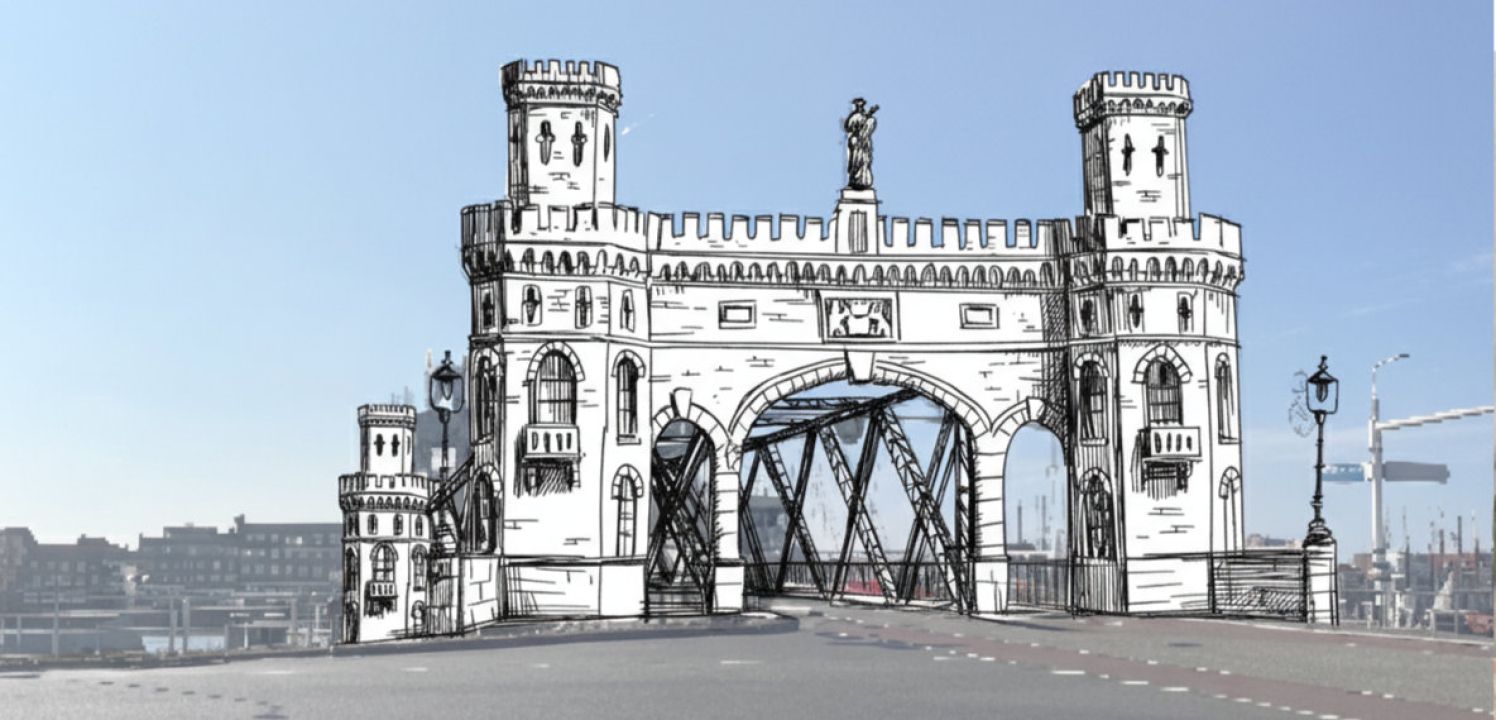
"For centuries we crossed the water by a little ferry, but a mighty Hanseatic city deserves a bridge. It is the gold that still gleams there today."
Resting on both banks, never moved from her place: our famous City Bridge.
Every river has a far bank. For centuries we cross the water by a little ferry, but a mighty Hanseatic city like Kampen naturally deserves a bridge. With our own money, in 1448, we become the first city in the northern Netherlands to build a wooden river crossing.
We were not born yesterday, of course. Anyone who wants to sail past us has to pay a toll. Other IJssel towns call it a disgrace. But we do not bow to their complaints.
Look through your lashes and see the IJssel full of ships sailing to or from the sea. Every ship is a coin in our purse. It is 1872, we get an iron bridge with magnificent gatehouses, our very own Tower Bridge of Kampen! Strong enough for eternity, but, as so often, fate decides otherwise. The Second World War proves fatal to our beautiful gateway bridge.
Still, it is gold that gleams there! In 1999 the whole bridge was replaced by one with golden wheels. Can you see them?
Text written by © Bas Steman
Where can you find the Kogges and the Hanseatic League panel?
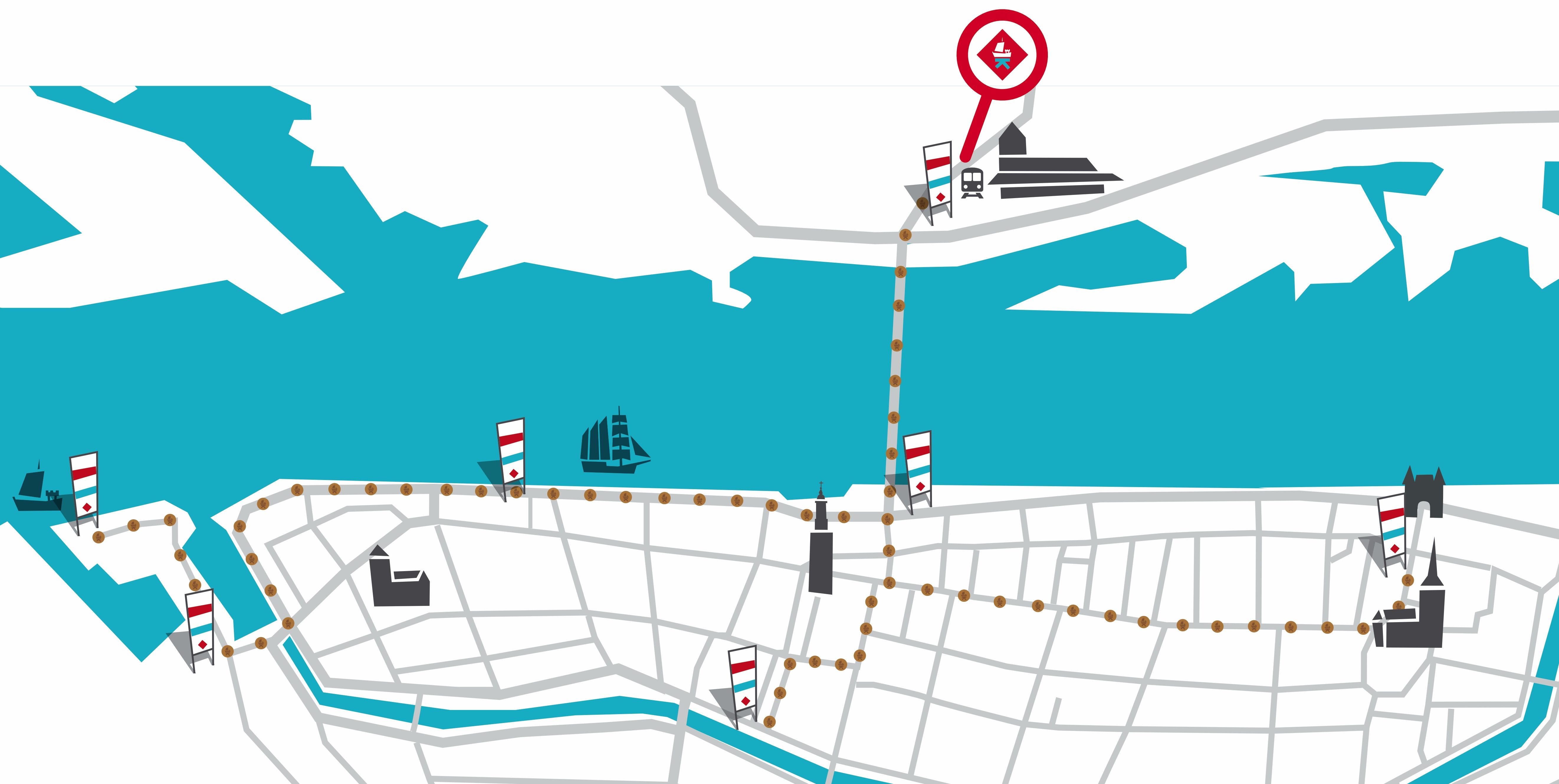
Click the map to open the walking route
The soil of Kampen is an open book full of stories.
These archaeological finds are the tangible reminders of daily life in the Hanseatic city. Every object tells part of the story of our ancestors – from their crafts to their trading voyages on the IJssel.
Scroll on and discover the special treasures the city has given up.
Once made of wood
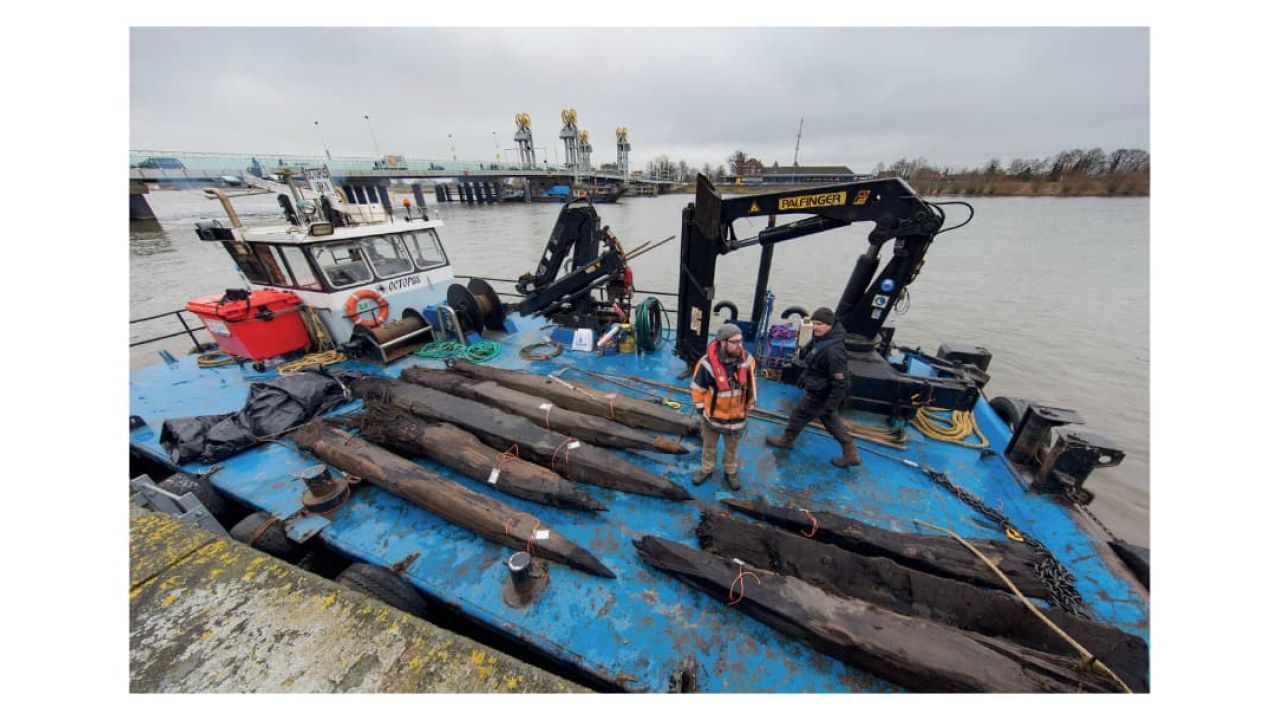
From 1448 the bridge over the IJssel was made of wood. In 1872 the last wooden bridge was demolished to make way for an iron bridge on stone piers. Just as foundations often remained in the ground after towers, gates and city walls were pulled down, remains of the wooden predecessors of the iron bridge were also left behind in the bed of the IJssel.
During dredging work in the IJssel in front of the city, many wooden piles came to the surface.
Some of them may still date from the old wooden bridge of 1448.
On guard
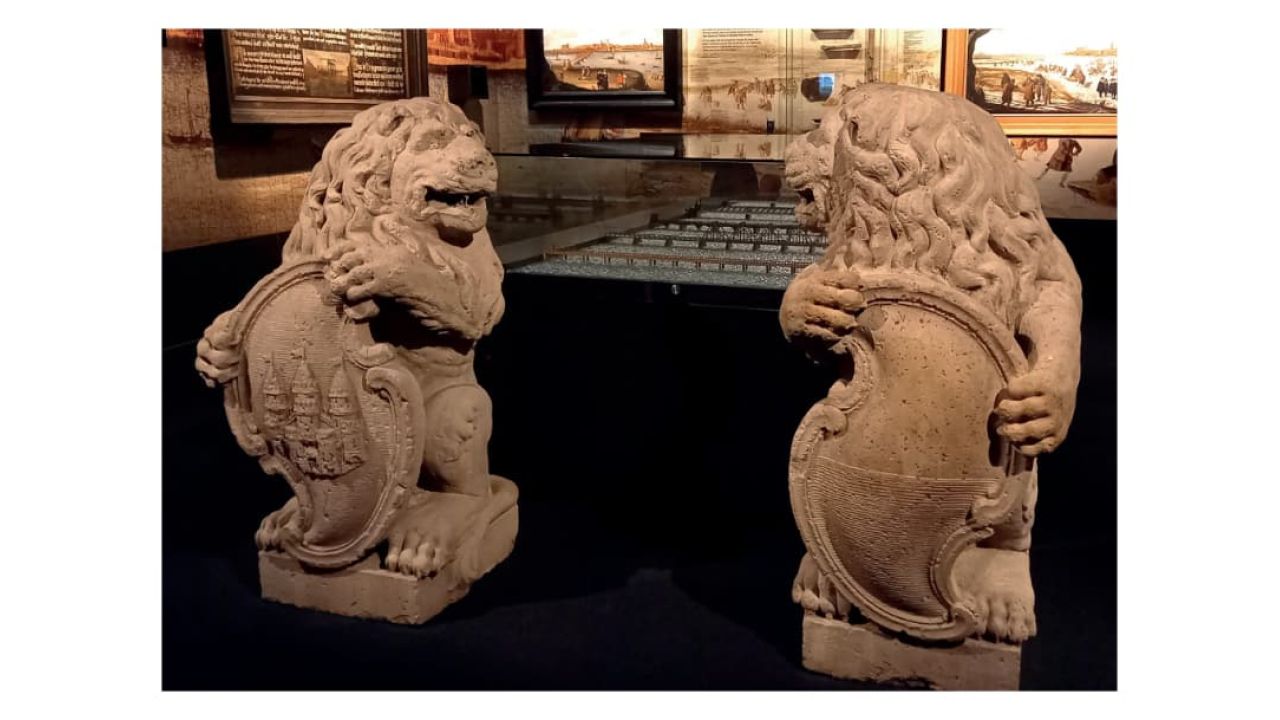
If you stepped onto the wooden IJssel bridge from the far bank, you passed two life-size lions looking straight at you.
Made of stone, fortunately, one carries a shield with the Kampen coat of arms, the other a shield in the Kampen colours (white and blue).
They saw a great deal of the city after 1872, but these days they are resting in the Stedelijk Museum Kampen.
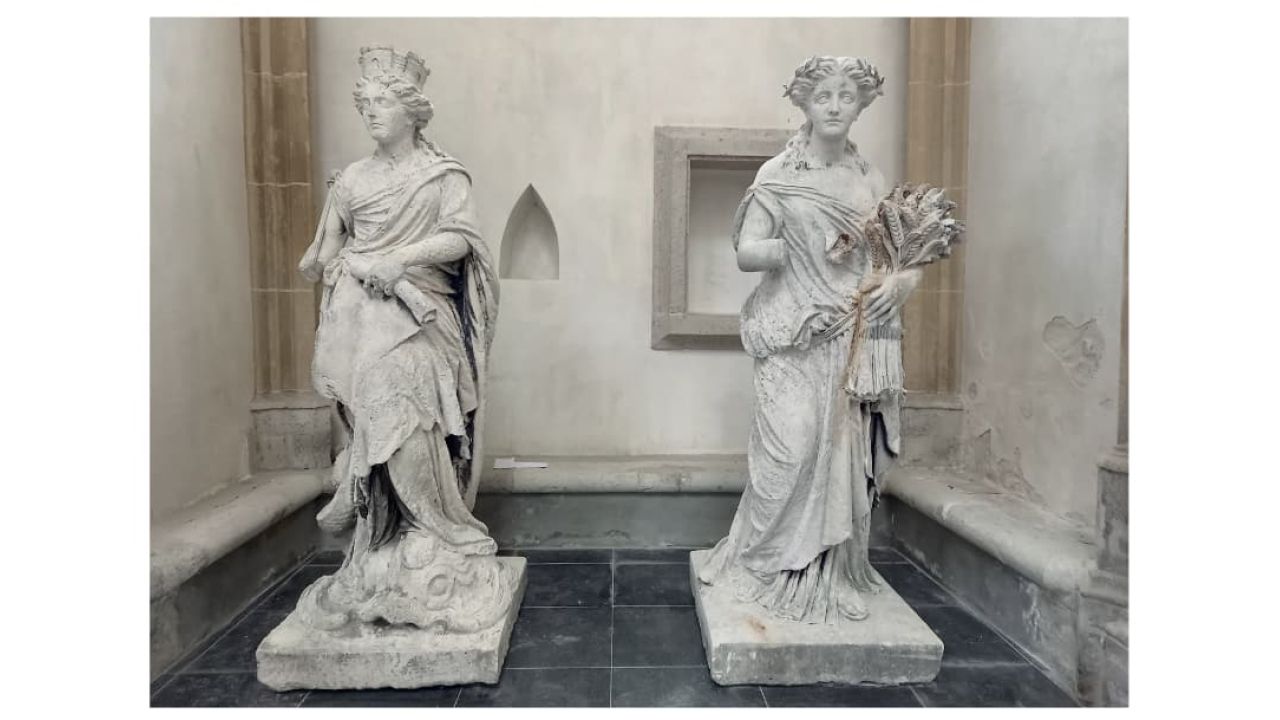
Statues of pride
In 1873 Kampen, a proud city, built a new iron bridge over the IJssel. With its magnificent gatehouses, it radiated pride. This was underlined even more by monumental statues on these gatehouses.
If you stepped onto the bridge from the far side, the crowned City Maiden looked down on you, a document in her hand. On the Kampen side, Trade and Industry made it clear to you that Kampen was still a prosperous city. The gatehouses have been gone since 1945.
But after decades in anonymous storage, the City Maiden and Trade and Industry now look down on you again in the Bovenkerk.