

Viewing panel The IJsselkogge
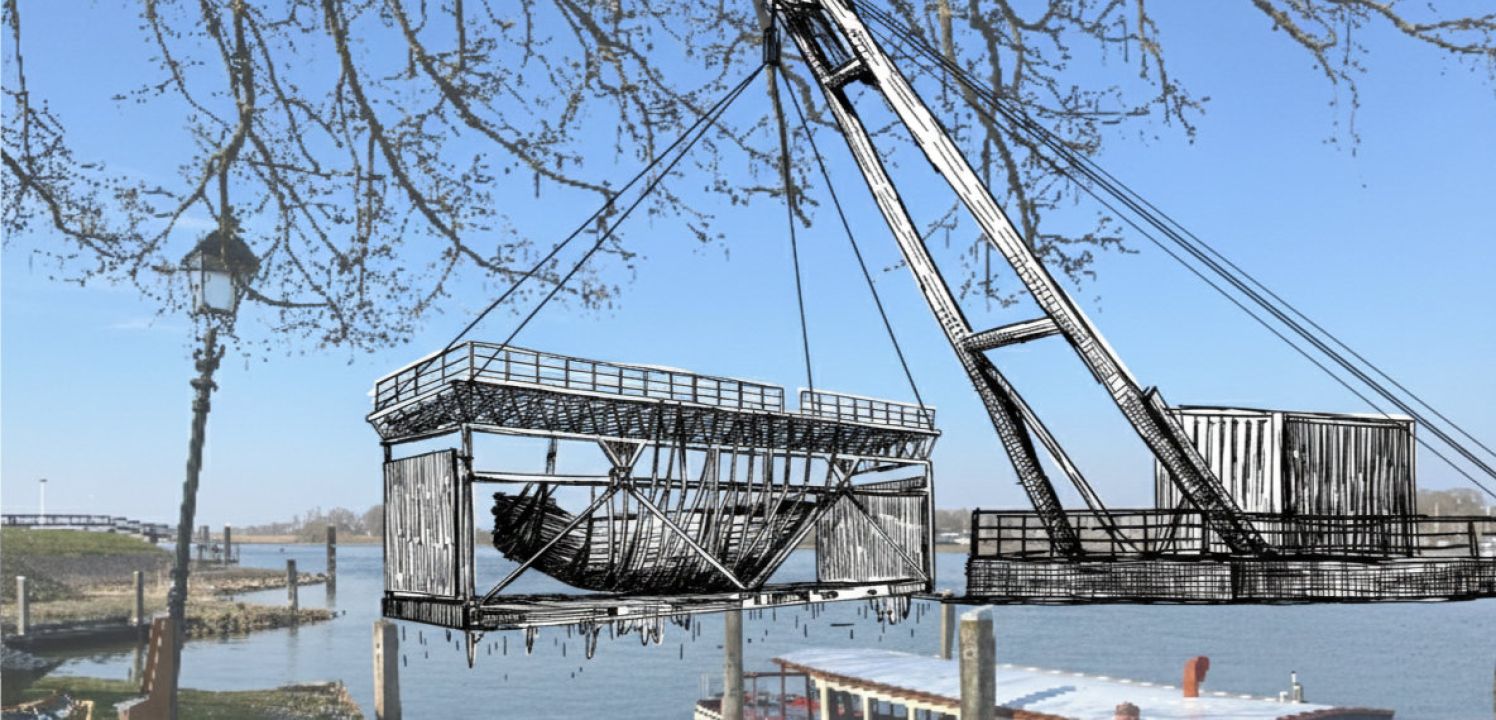
"What saved me? The dream that one day the hour would come. That I would lean on the wind and carry the white and blue flag of the city in my heart."
That day they let me fill with water, I capsized and sank. For what? After years of sailing under the Kampen flag, they sent me to the bottom. Their excuse: the river was silting up and my wreck would make the water flow faster. There I lay. What else could I do but go on dreaming of you?
Time forgot me. For centuries, holding my breath, my skeleton creaking beneath sand, water and the drone of the great ships that came later. In February 2016 I feel the earth and the IJssel slide off me, I get my own weight in wood back. Daylight stings my eyes. I see that the city has changed. Kampen, my Kampen!
What saved me? The dream that one day the hour will come. That I lean on the wind, cut straight through the foaming water, gaze at the sunlight on your towers, with the sail flapping above me and the white and blue flag of the city in my heart.
Text written by © Bas Steman
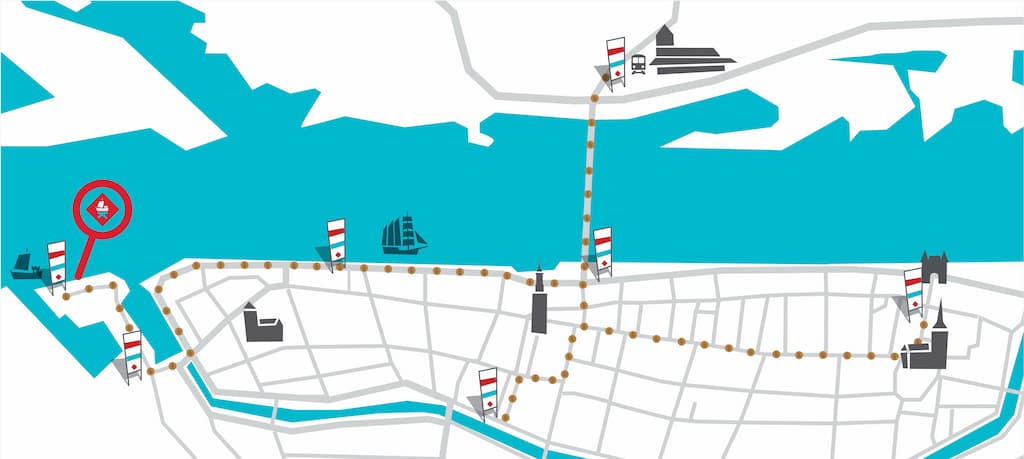
Where can you find the IJsselkogge?
Click the map to open the walking route
The soil of Kampen is an open book full of stories.
These archaeological finds are the tangible reminders of daily life in the Hanseatic city. Every object tells part of the story of our ancestors – from their crafts to their trading voyages on the IJssel.
Scroll on and discover the special treasures the city has given up.
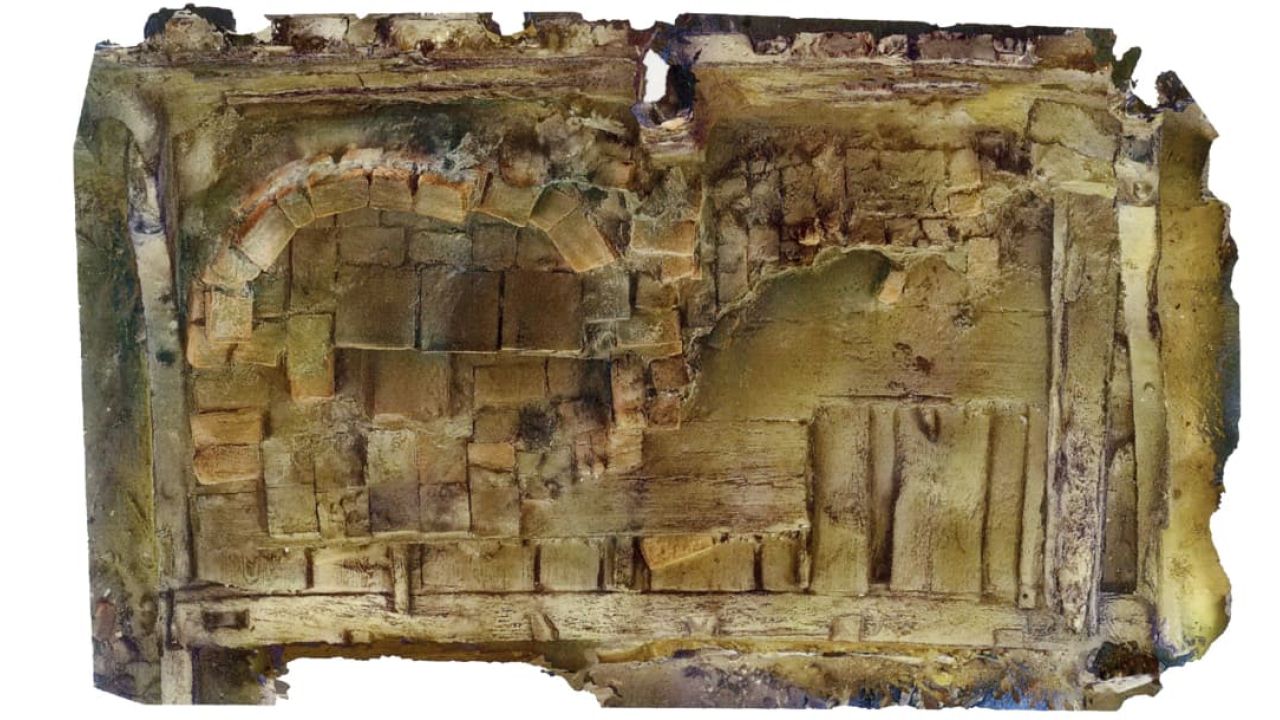
"Pizza oven"
Merchant ship, warship, supply ship for the fleet; the IJsselkogge has been all of these.
For cooking there was even a proper domed oven made of stone on board. Only the lower part has been found. But originally it must have looked like a pizza oven, according to the archaeologist. Pizzas were not yet known in the Middle Ages, but it is remarkable all the same. No other example is known.
Sadly, the cook left no cookbook behind.
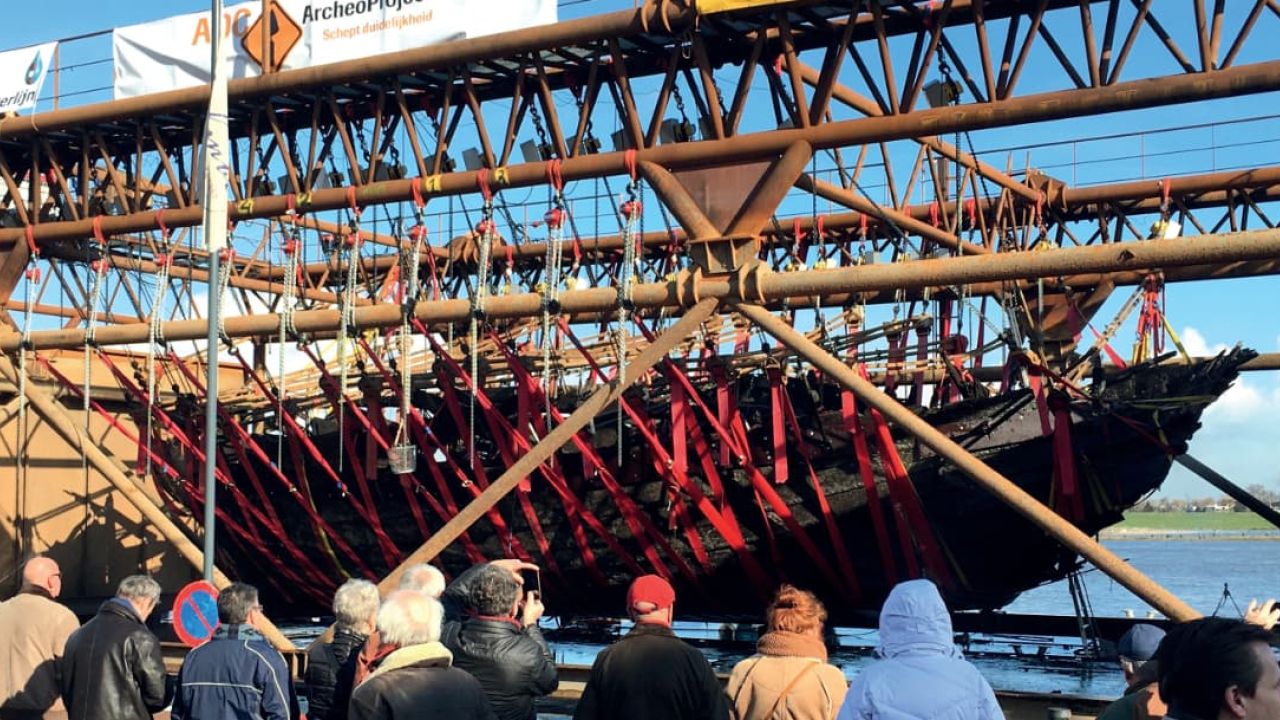
Hammock
Lazing in the sun in a hammock. It was winter and the sun was not shining when the cog was raised in February 2016. But hanging in the red cables on a pontoon at the quay, the IJsselkogge looked as if it were sunbathing.
Fortunately, that was not the case: sun would have dried the ship out. It was an impressive sight, though. The IJsselkogge has since been properly conserved and restored.
As an icon of Kampen’s rich Hanseatic past, it can now be admired, without a hammock. Not on the quay, but in a museum.
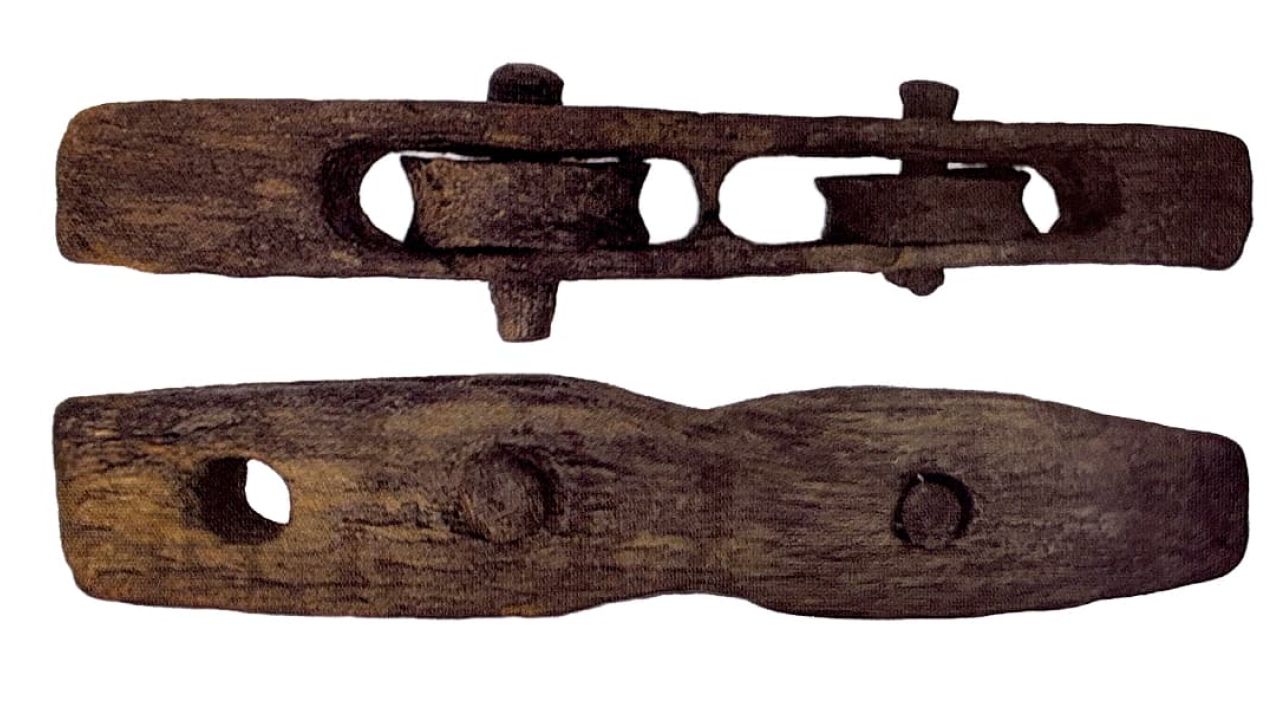
Old, yet as good as new
Hundreds of objects were found in the IJsselkogge, including this fiddle block.
It has nothing to do with a fiddle, but it is still used on sailing ships to handle free-hanging lines. Because the two unequal sheaves lie in line with each other, the block can never be pulled askew.
It was probably kept on board the IJsselkogge as a spare part, which is why it still looks as good as new after almost 600 years.