

Viewing panel The Kogges and the Hanseatic League
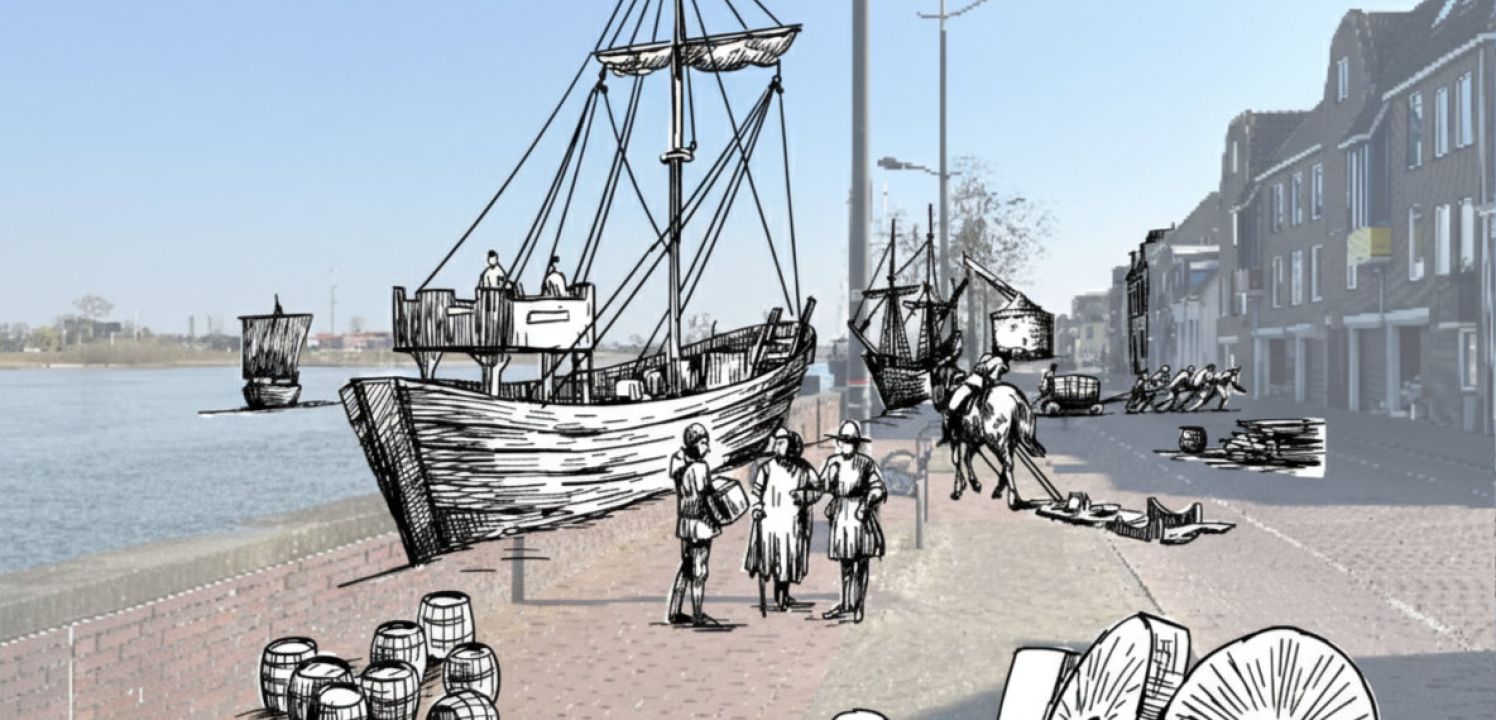
"The water of the IJssel does not only lap against the quay, it also carries the distant sound of the sails, heavy with the money of our golden Hanseatic age."
This water still remembers everything about the sails. It hears the skippers, the porters, the singing of their wives.
Every day old centuries wash ashore, the great cranes rise again on the quay, they fill the holds of our cogs with timber, fish, cloth, salt. Dozens of ships cast off and moor. We are the most important transhipment port in Europe. Money sloshes over the quay here. A good hundred cogs sail under the Kampen flag. They cross the Zuiderzee for the ommelandvaart, sailing round Denmark to the Baltic. Others sail to England or Portugal.
Far from all the ships return to Kampen. Storms lie in wait and pirate scum lurks. To spread the risk, we divide cargoes over several ships and sail in convoys. We work together with other cities in Europe, the Hanseatic cities.
Everything is still here, everything remains, for those who know. She will never forget that time, this water.
As long as our IJssel keeps flowing, it will never grow any later here.
Text written by © Bas Steman
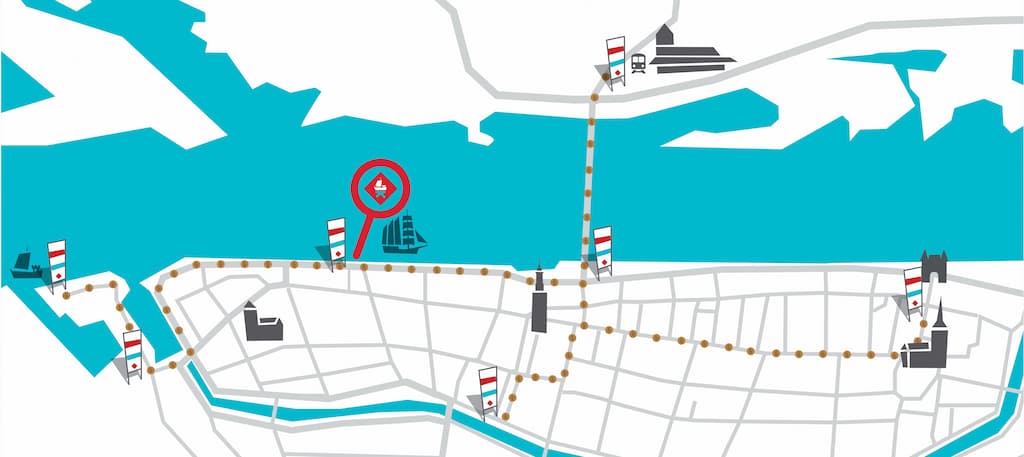
Where can you find the Kogges and the Hanseatic League panel?
Click the map to open the walking route
The soil of Kampen is an open book full of stories.
These archaeological finds are the tangible reminders of daily life in the Hanseatic city. Every object tells part of the story of our ancestors – from their crafts to their trading voyages on the IJssel.
Scroll on and discover the special treasures the city has given up.
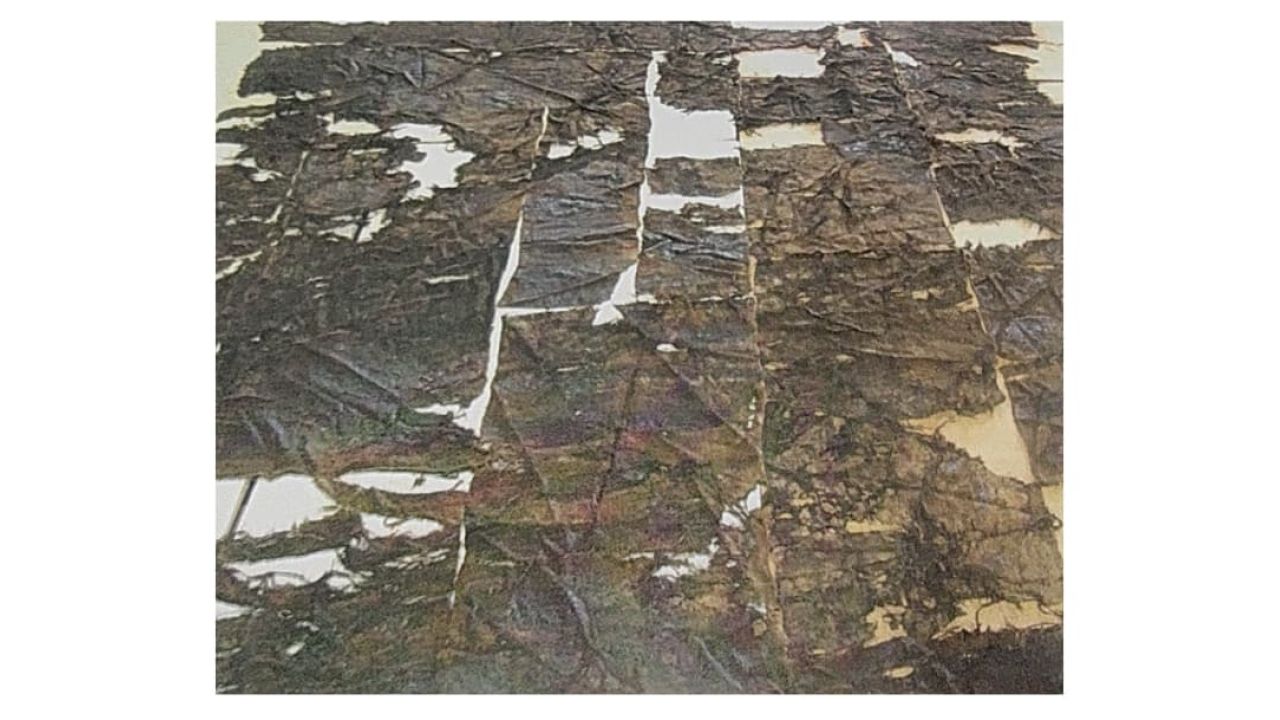
Under canvas
Sheltering from the rain under a sheet of canvas. People have always done it.
Stretched over a wooden frame, it let you shelter from the rain underneath - as in a tent - on a small open boat, or perhaps even on the deck of a cog? The oldest (14th century) and largest example of such a sailcloth, made of coarser pieces of brown wool and pieces of finer fabric, was found in Kampen on the site of today’s Margaretha. There must once have been a small shipyard here.
Had the sailcloth perhaps been worn out and thrown away, which is how it ended up in the ground?
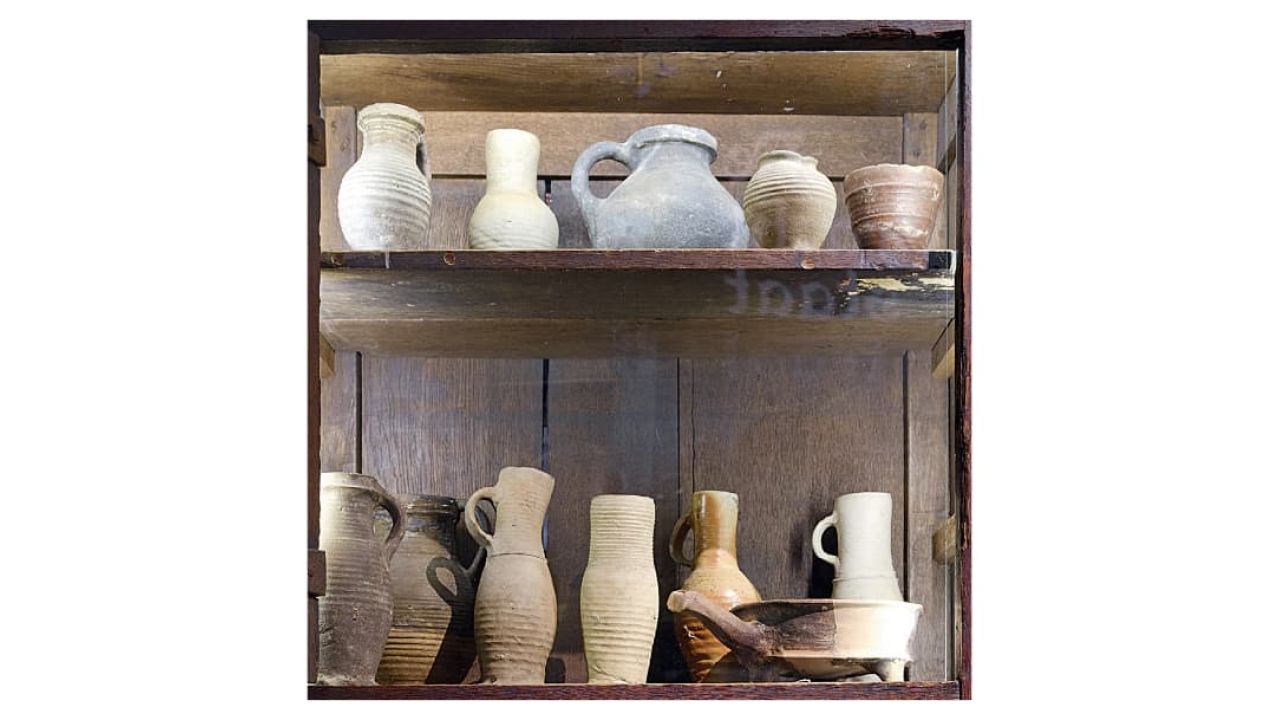
"Porcelain" of the Middle Ages
Earthenware is porous, so earthenware beakers have to be glazed. Stoneware is much harder than earthenware, but at first it was made mainly in the Rhineland.
A great deal of early Rhenish stoneware from the 13th century has been found in Kampen’s soil, shipped to Kampen via the Rhine and the IJssel. It tells us not only about Kampen’s trade with the Rhineland, but also about the wealth of Kampen’s citizens.
Just as ‘porcelain’ was later a precious imported product, so was stoneware a few centuries earlier.
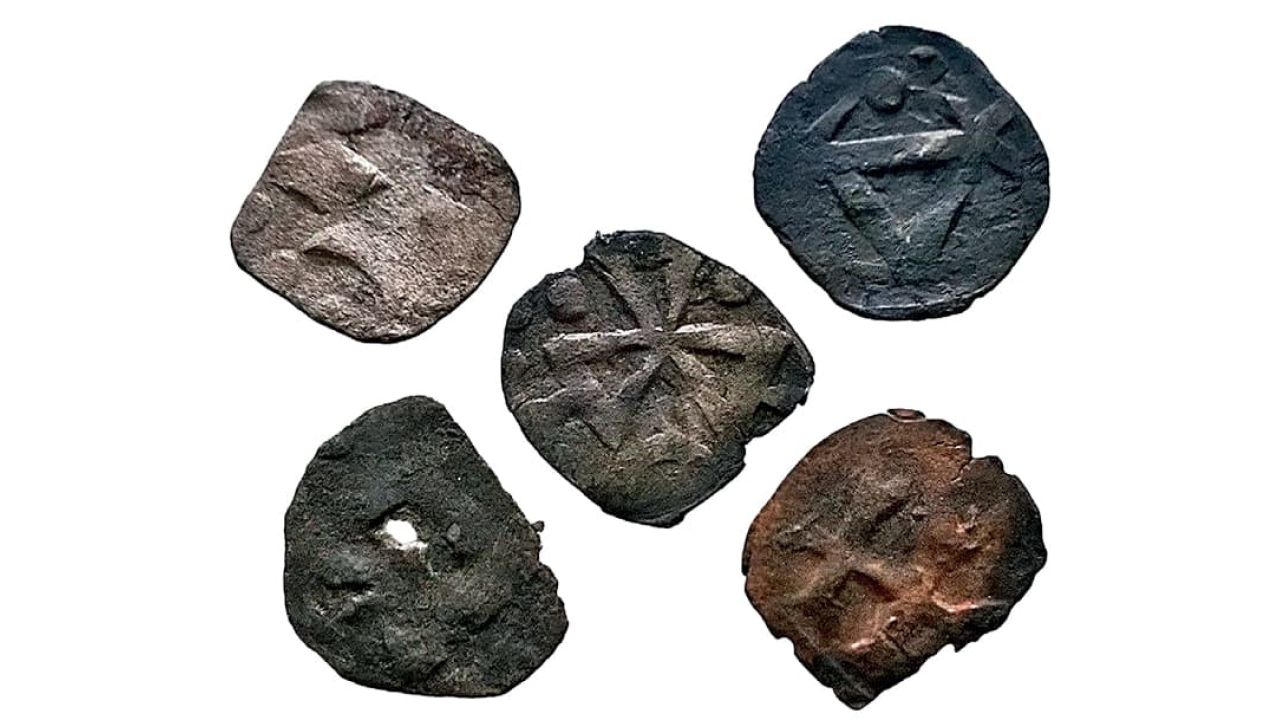
Denmark in Kampen
In Kampen’s heyday, the annual fair of Scania (southern Sweden) was the place to be for Kampen merchants.
Merchants from our region, Denmark, Germany, Norway and Sweden gathered there, bringing coins from their own lands. Proof that Kampen merchants traded with them there comes from these 14th-century coins, struck in Roskilde (Denmark) and Lund (Sweden), which were once lost there.
More than 600 years later they were found again in the ground beneath what is now the Margaretha care home on the Burgwal.