

Viewing panel The Lion Tower
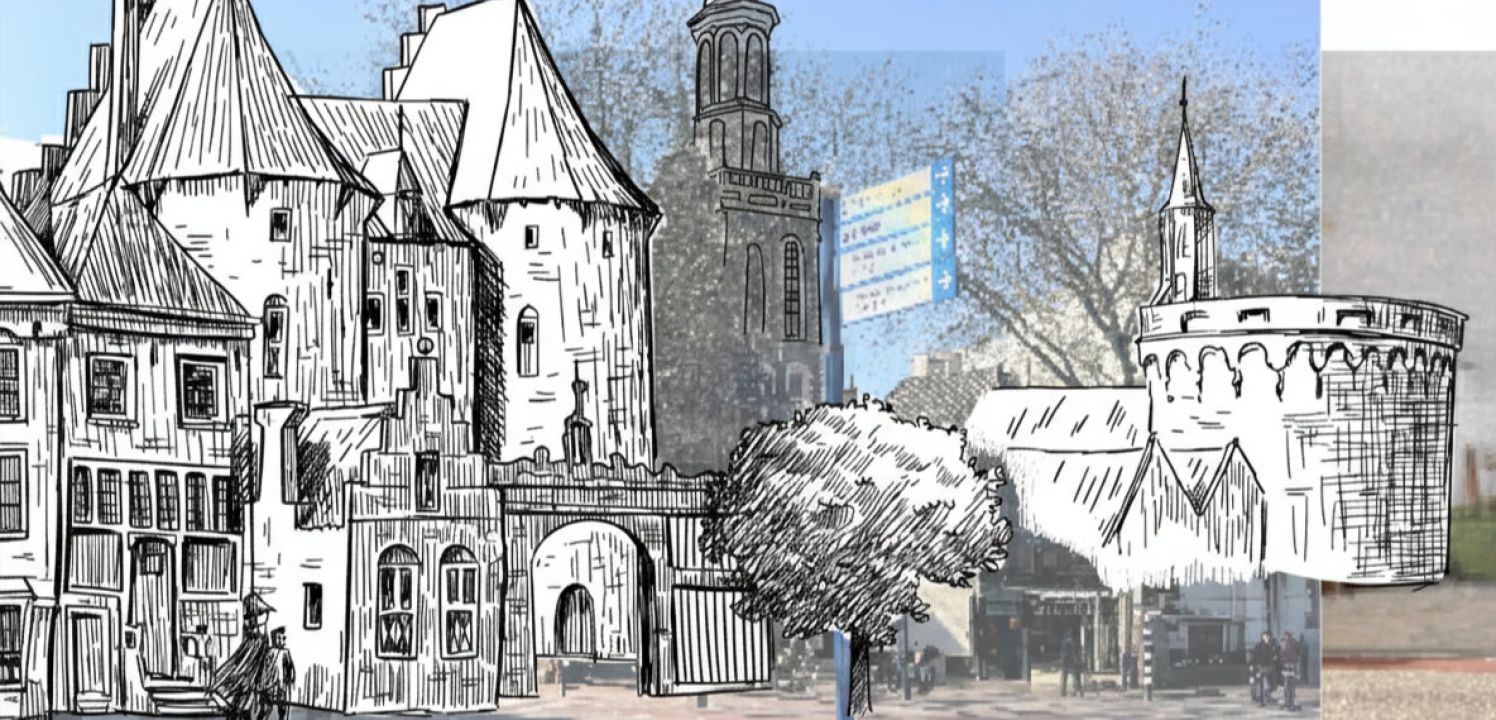
"Be still and close your eyes. Lions once lived in Kampen, but you will only see them if you dare to believe they are there."
Look, but do not believe your eyes. Only then will you see not a post office, but the great round tower.
One of the tall bastions in the city wall that protects us from the riff-raff. Now be still and listen. Can you hear them? Our lions? Since 1483 our Kampen lions have lived in this tower. An exotic and precious gift from Portugal, a lion and a lioness.
Our lion keeper, Jacob Johanz., feeds them sheep and cows from the lands of Seveningen and the Greente.
The pair of lions has cubs. We give them to Lübeck, the most important Hanseatic city of the day. To underline our friendship and, of course, to grease the wheels of trade.
Our lions live in the Lion Tower until 1500. To the eye, nothing remains. In 1673 the French blow up our tower.
To see the lions, you must close your eyes.
Go on, look within yourself and hear the roar of the king of beasts carried away on the IJssel.
Text written by © Bas Steman
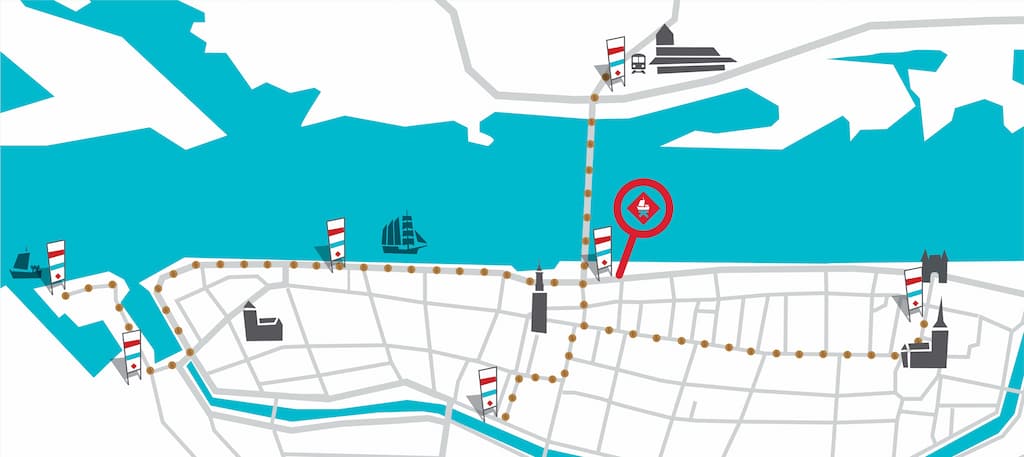
Where can you find the Lion Tower?
Click the map to open the walking route
The soil of Kampen is an open book full of stories.
These archaeological finds are the tangible reminders of daily life in the Hanseatic city. Every object tells part of the story of our ancestors – from their crafts to their trading voyages on the IJssel.
Scroll on and discover the special treasures the city has given up.
Tangible after all
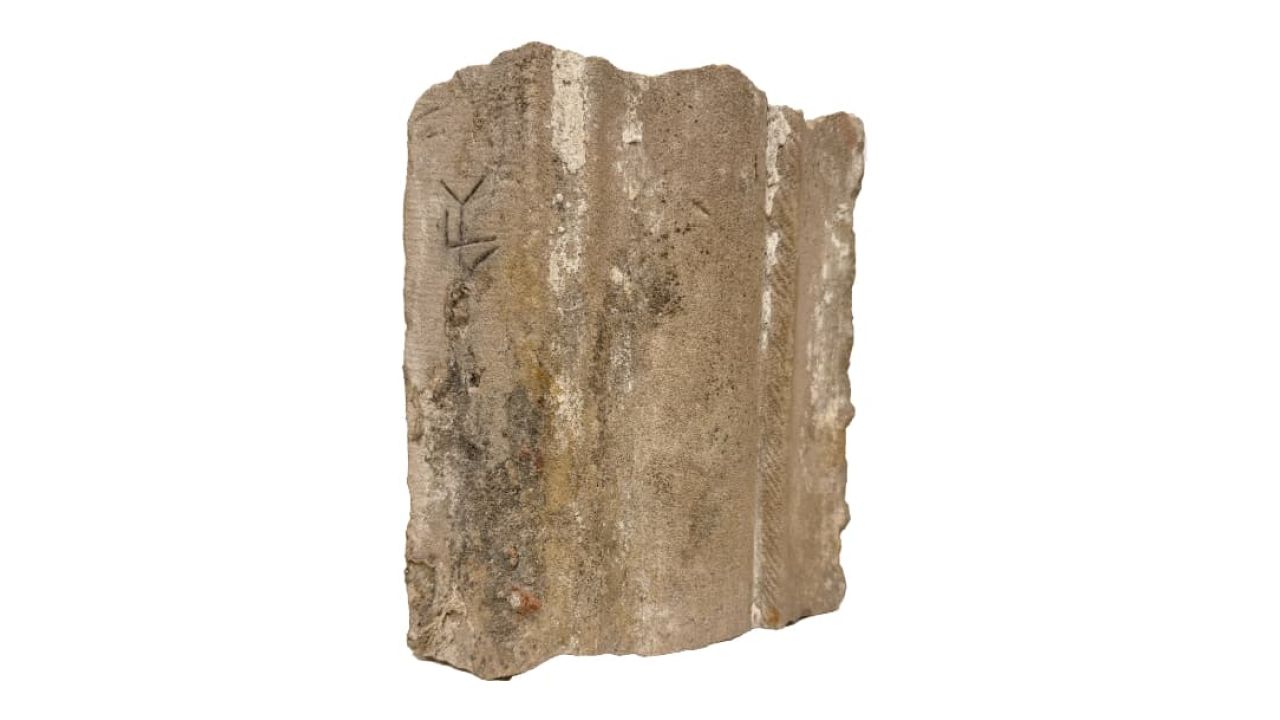
Almost all the towers and gates along the IJssel were demolished in the 19th century; the Lion Tower and the nearby Vispoort too.
All we have left are pictures and sometimes a few – invisible - remains of foundations, as with the Vispoort.
And yet… there is one tangible object from the Vispoort after all!
It is not much, but this fragment of natural stone from the Vispoort came to light forty years ago during sewer works.
From Kampen to Lübeck
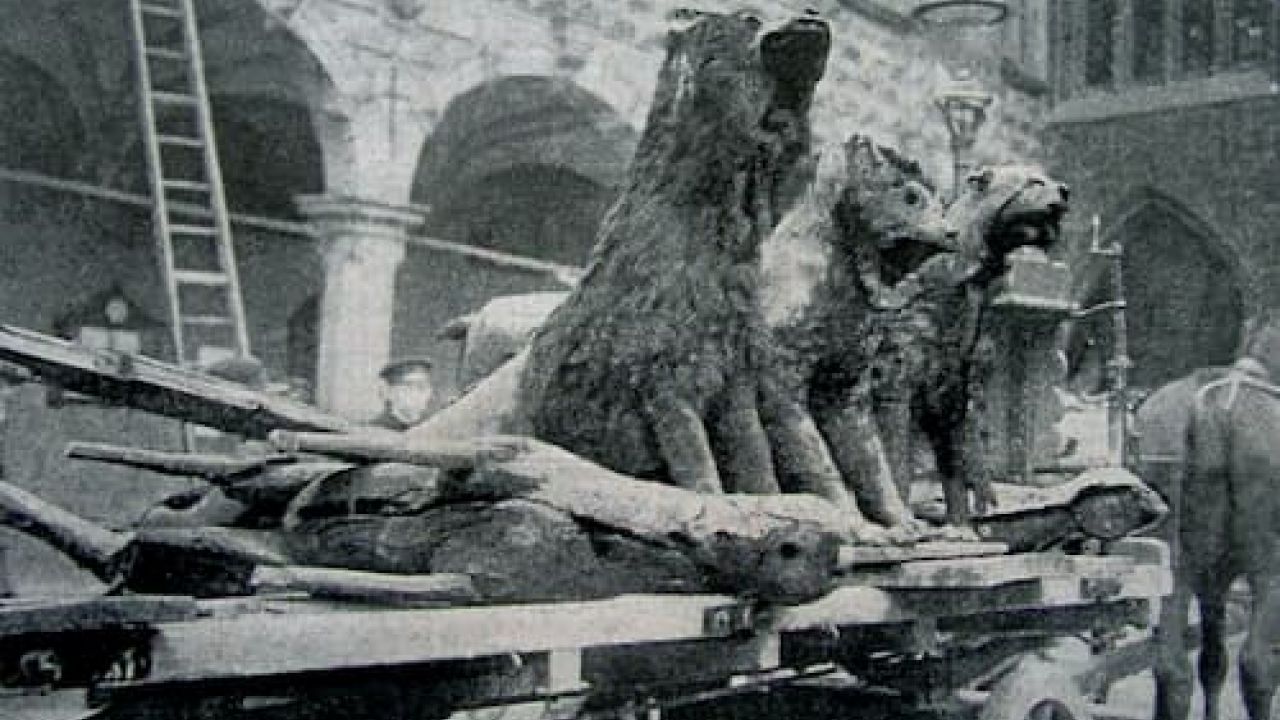
Of the Kampen lions, nothing remains but written accounts.
Lübeck was prouder of the cubs it once received from Kampen. After their death they were stuffed, and for centuries they adorned one of the halls in the town hall of the Hanseatic city. Although they were moved to the museum in 1915, they did not survive the devastating bombing raids at the end of the Second World War.
But a photo of their transport does survive! And that is more than we have of the Kampen lions.
Amsterdam on the quay
Near the Vispoort and the Lion Tower there was also a large crane. This was the most important spot along the quay for loading and unloading goods.
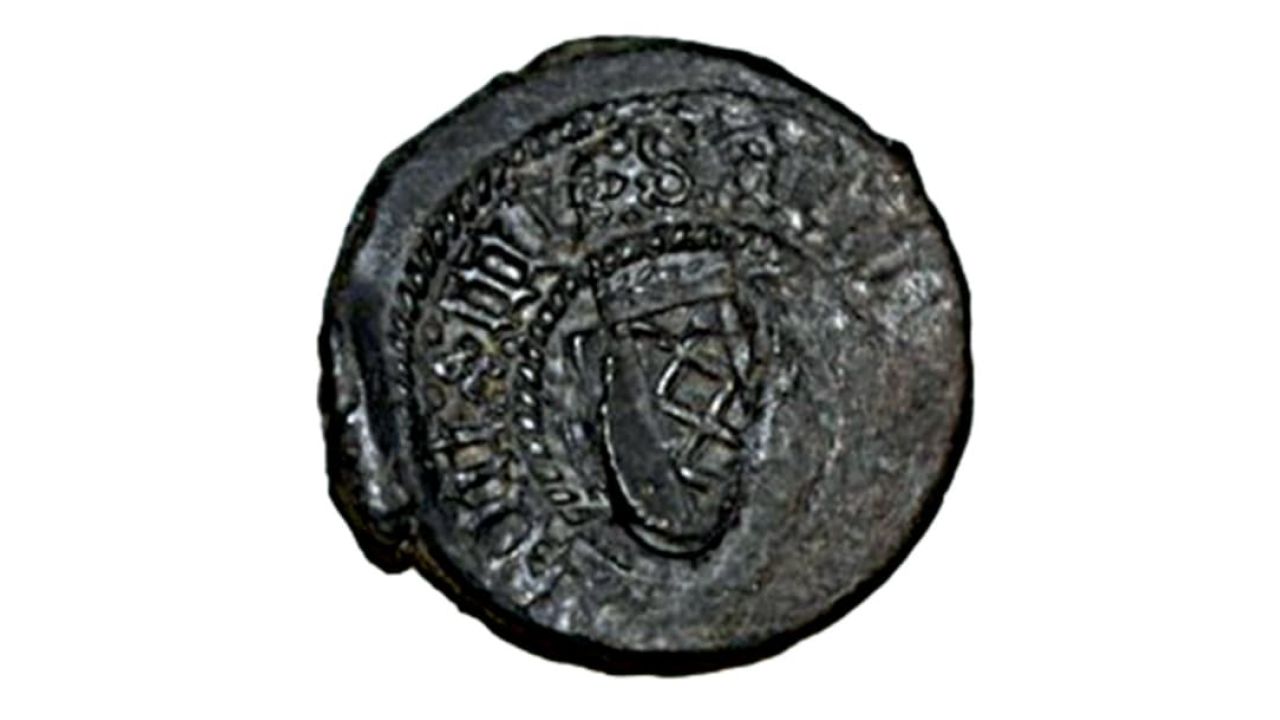
In the Middle Ages, cloth was an important trade product. The IJssel region was then a major market for cloth from Leiden and Amsterdam, which was unloaded from ships here on the quay.
This cloth seal from Amsterdam, c. 1450 (a kind of quality mark attached to the cloth), found on the Stadsbrugplein, is the proof.