

Viewing panel The Hagenpoort
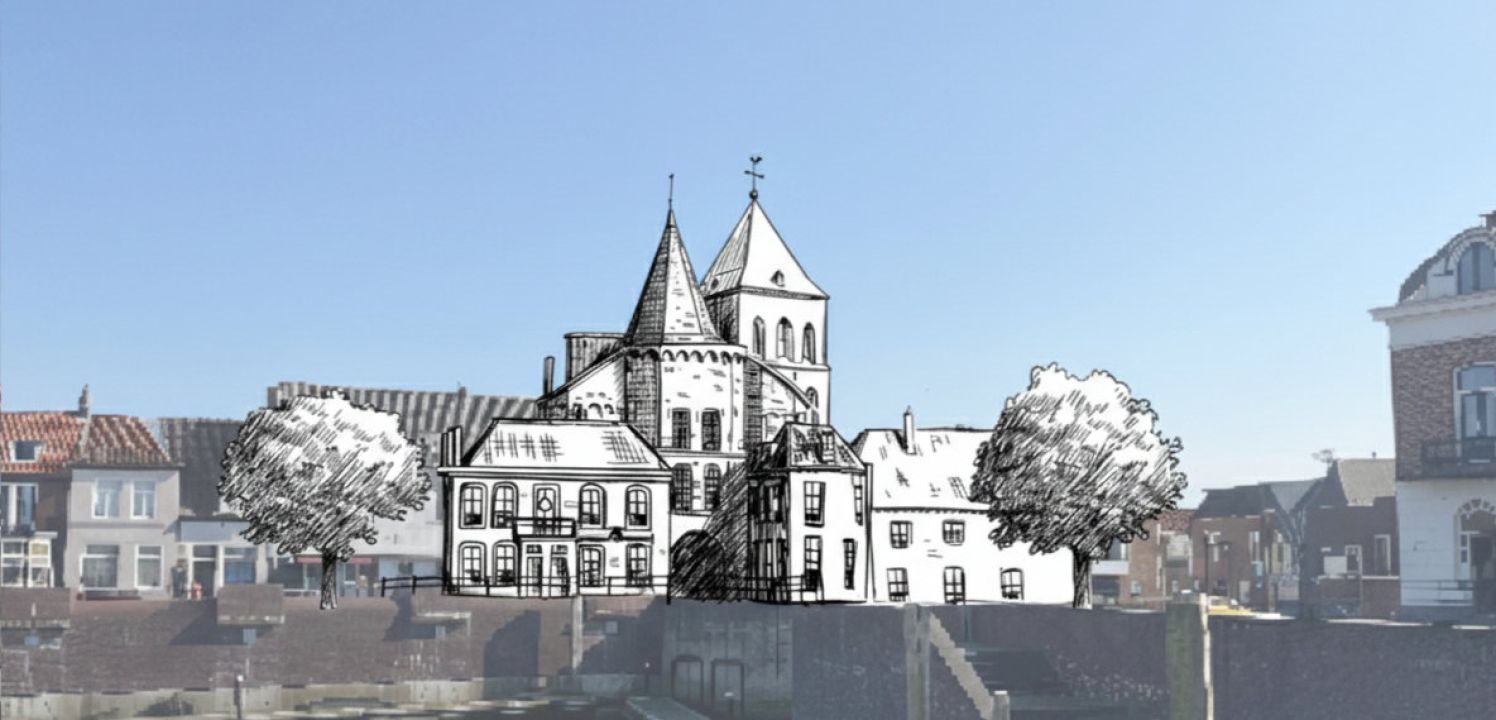
"Once we were many, now only three are left. But if you listen carefully, the fourth still speaks to you."
Once we were many. Only three city gates are left. Not me. Because I was supposedly in the way.
Well, excuse me! That is what I was built for, to protect the people of Kampen, to keep the riff-raff out. Centuries of service, and then an end like that.
I fought. Leaning out of my window, our burgomaster Arent toe Boecop negotiated with the troops of William of Orange. Don’t get me started. Never call them liberators. Had I not held firm back then, the States’ troops would have plundered our city there and then, stripped our churches, driven out our clergy, torn the soul out of our existence.
For me, the danger came from within.
I, Hagenpoort, an obstacle to traffic. In 1893 the city council saw fit to demolish me. Had they been able to look ahead in those days, they would now see me standing in all my glory.
Look! There is our magnificent Hagenpoort! But I am still here, in spirit. They used my stones to restore the old town hall.
Put your ear to its walls there and listen whether you recognise my voice. I have so much more to tell you.
Text written by © Bas Steman
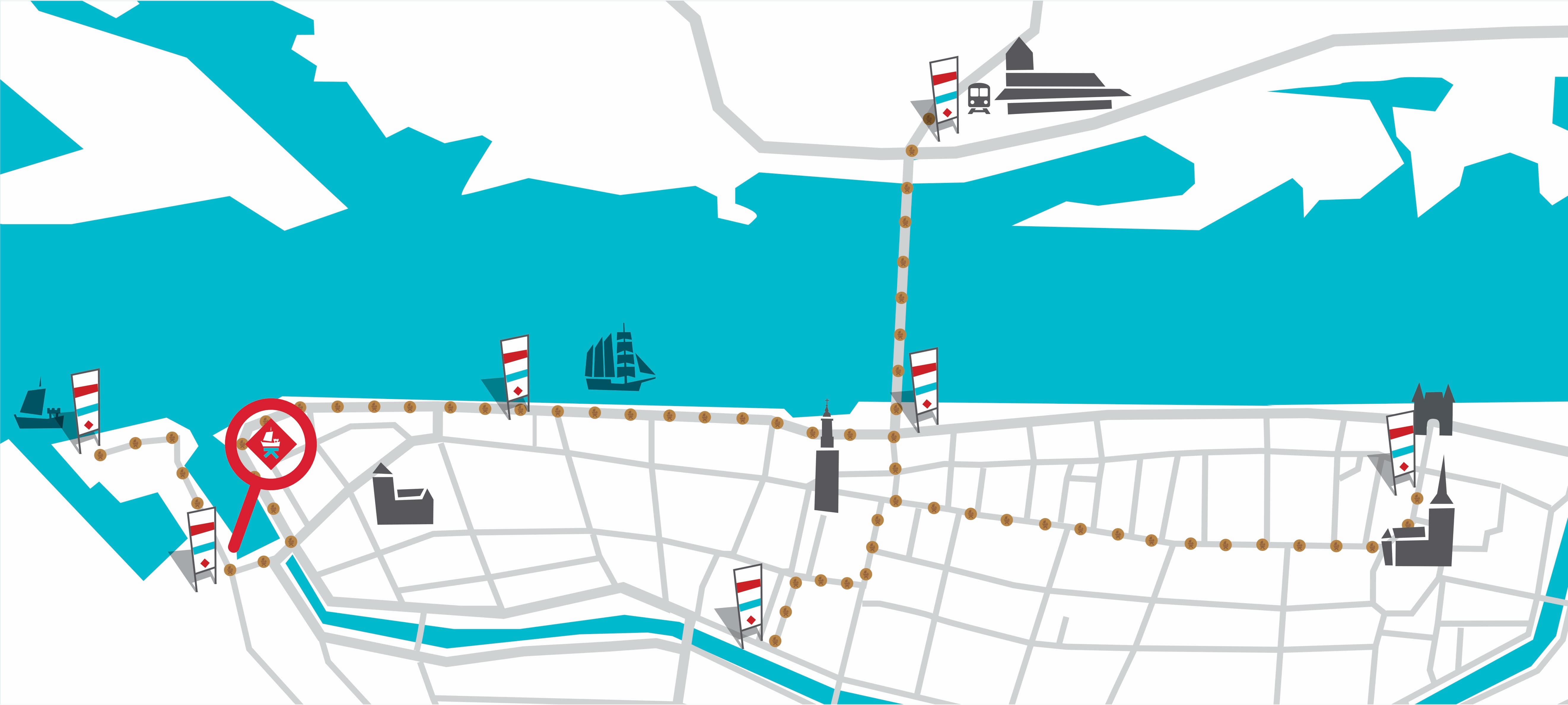
Where can you find the Hagenpoort?
Click the map to open the walking route
The soil of Kampen is an open book full of stories.
These archaeological finds are the tangible reminders of daily life in the Hanseatic city. Every object tells part of the story of our ancestors – from their crafts to their trading voyages on the IJssel.
Scroll on and discover the special treasures the city has given up.
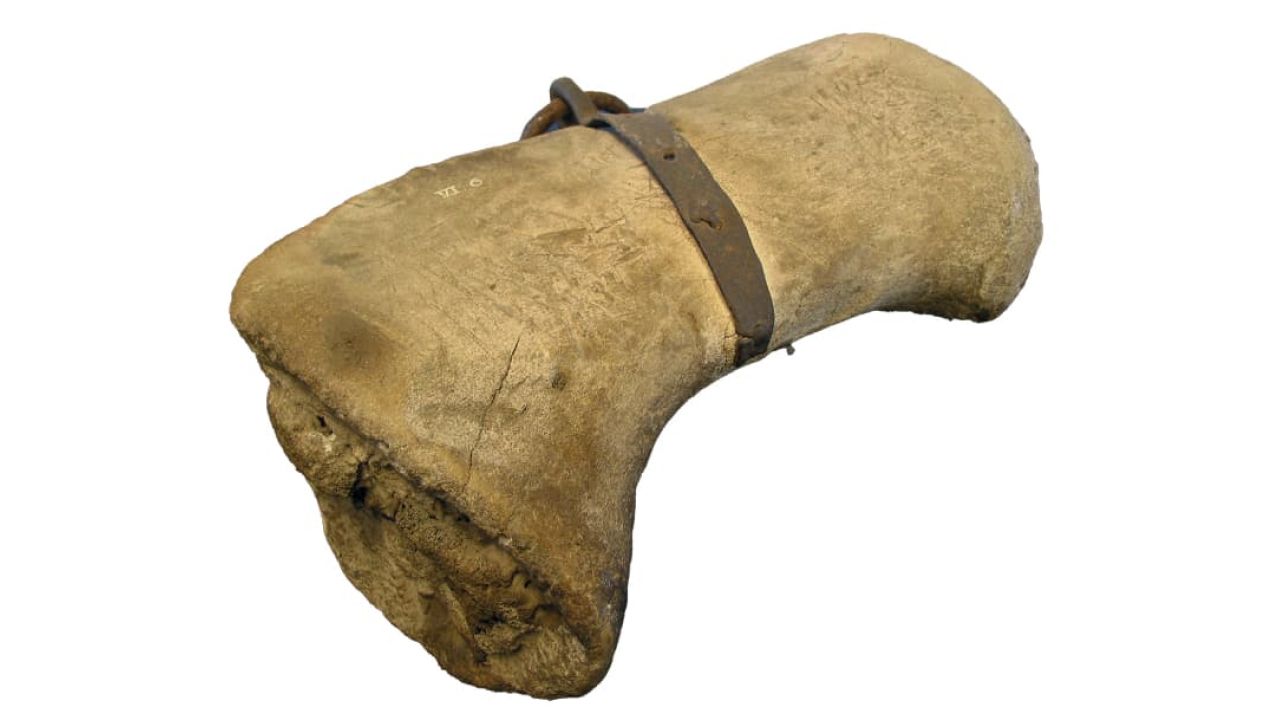
Bone and chain
The Hagenpoort guarded the entrance to the city, but it was also the city prison.
Criminals were locked up here, interrogated, tortured if necessary, or served out their sentences. And sometimes, as a punishment, you walked out of the gate and through the town with a bone tied to your leg. The instruments of torture have not survived the centuries. But this mammoth bone, which had to be dragged along as a punishment, still exists.
Fortunately, it is no longer in use.
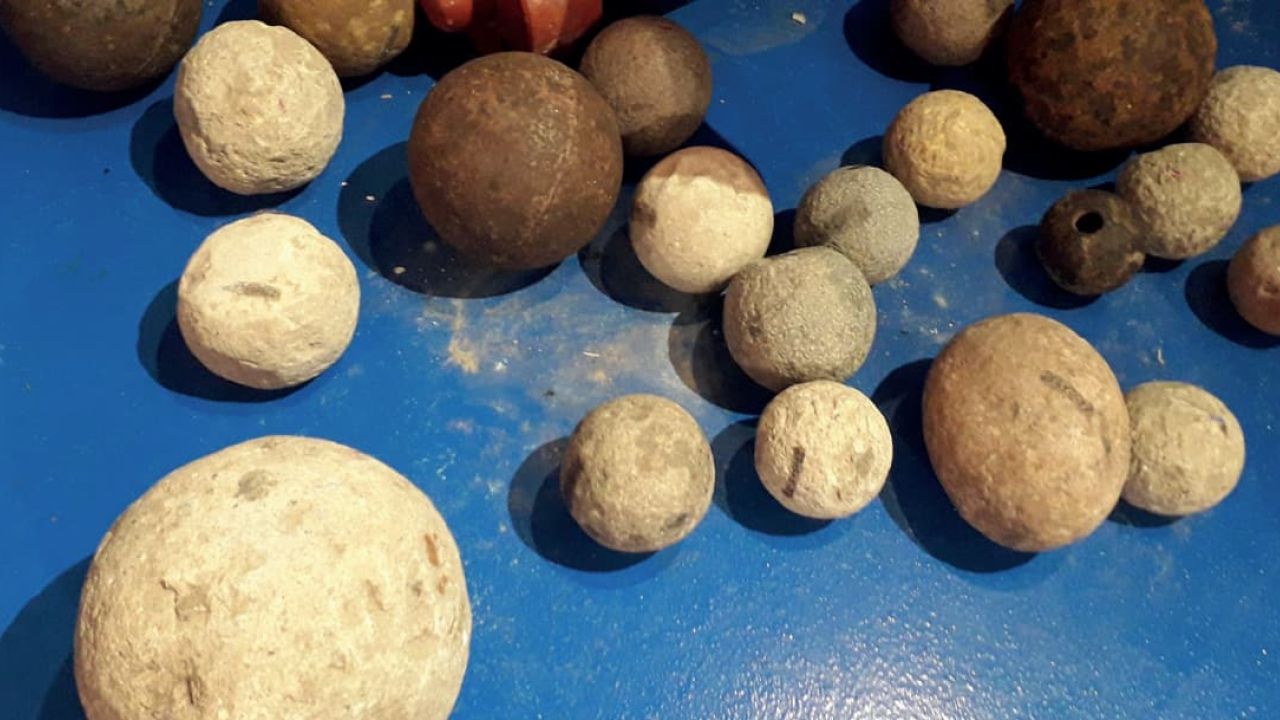
A rain of cannonballs
War and cannons have always been with us. And where there are cannons, there are cannonballs.
In 1578 the Hagenpoort and its surroundings were bombarded with dozens of cannonballs by the troops of William of Orange. So heavily, in fact, that the city wall near the gate eventually gave way. Dozens of cannonballs from different periods have been found, not near the Hagenpoort but elsewhere in the city; large and small, of stone and of metal.
Reminders of turbulent times.
To a happy outcome
In 1572 Arent toe Boecop leaned out of the window to negotiate with the brother-in-law of William of Orange. In the end the city surrendered on what were thought to be favourable terms. It is quite possible that Arent and the city council drank a tankard of beer to it that evening.
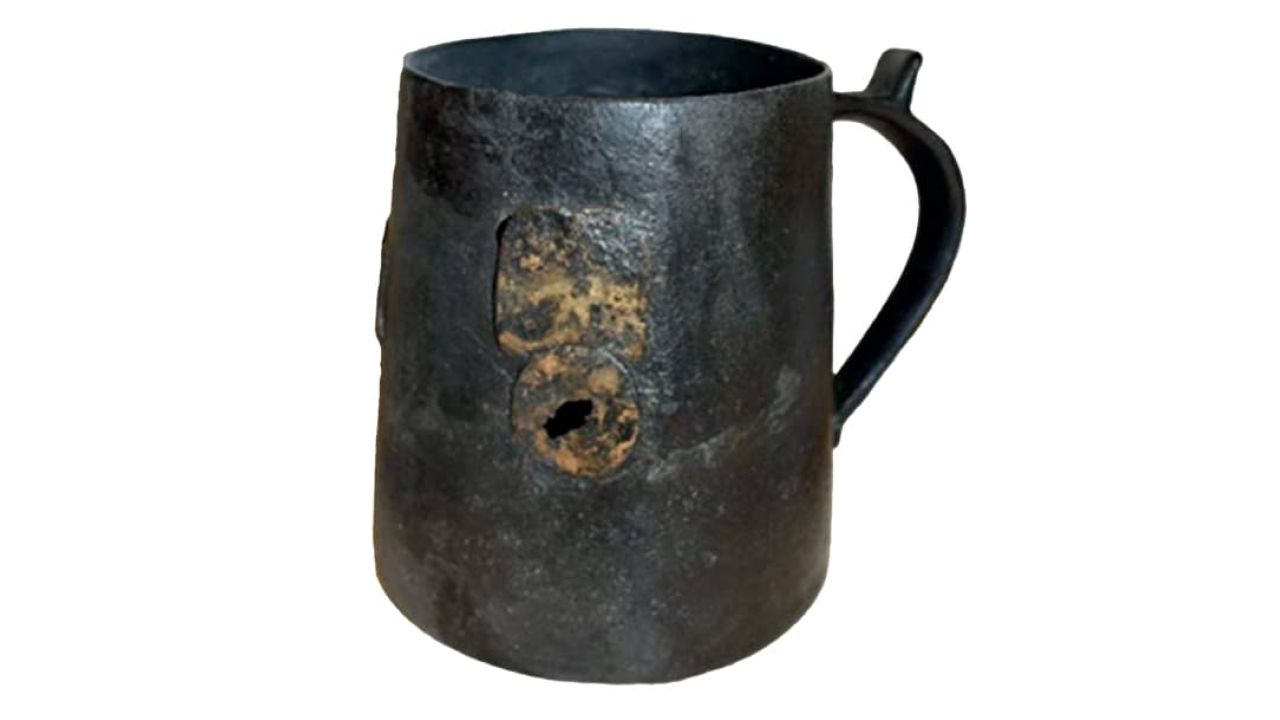
Would their beer tankards, like this bronze beer beaker from the 14th century, also have borne the – cast-in – Kampen coat of arms? We will never know. What we do know is that the owner of this beaker lost it.
It was found, you see, in a wooden cesspit barrel, in other words a barrel that once received all the rubbish and excrement.